From a potato battery to Stockholm: Shad alum Moroti Adegboyega on building, giving back and championing youth innovation
Stories
Last year, when Moroti Adegboyega was building models with his teacher’s 3D printer, diving into the particularities of water science, and iterating design after design for his regional science fair project, he did not expect to find himself at a world-renowned science competition – let alone winning its top prize.
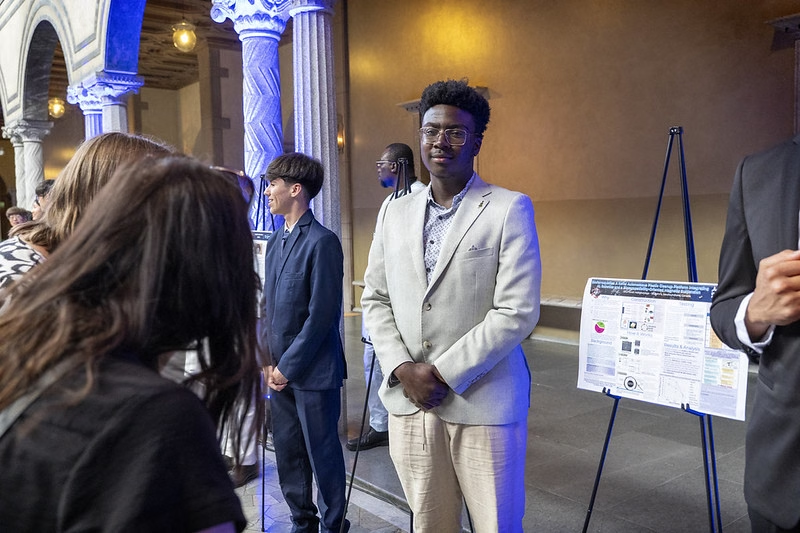
Moroti Adegboyega presenting his award-winning project, Ecoferroquatics, to guests in Stockholm City Hall. Photo Credit: Jonas Borg - Stockholm Water Foundation
Yet, this past August, the Grade 12 student from Newfoundland spent one week in Stockholm, Sweden for the Stockholm Junior Water Prize – a prestigious and long-standing competition where students representing more than 40 countries present research solutions for major water challenges.
Moroti was selected as Canada’s delegate for his project Ecoferroquatics, which addresses the issue of plastic pollution in water. It’s estimated that 11 million metric tonnes of plastic waste enters our oceans every year, posing risks to human health, marine life and biodiversity.
Moroti among fellow competitors representing their countries with their flags at Stockholm City Hall. Photo Credit: Jonas Borg - Stockholm Water Foundation
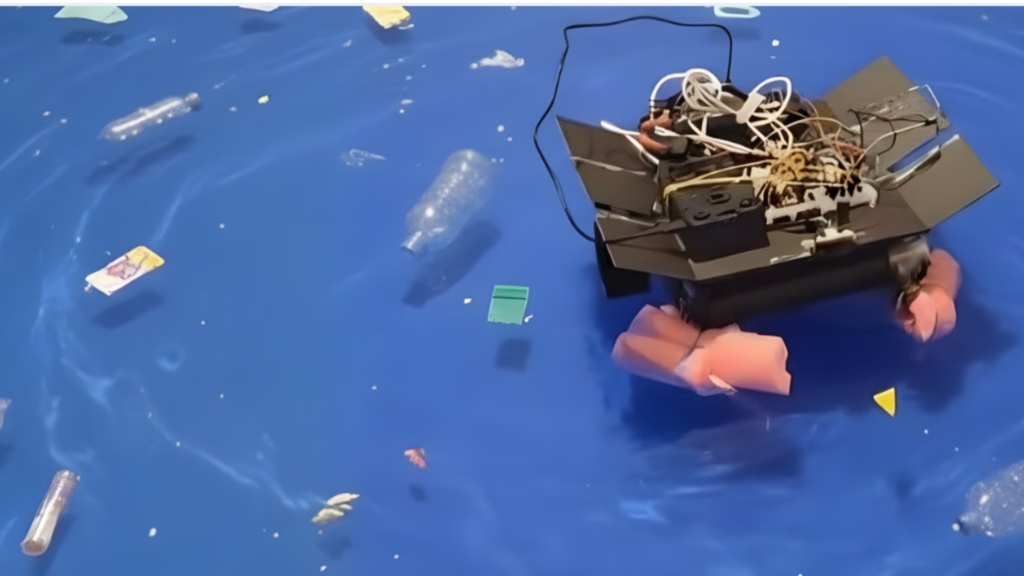
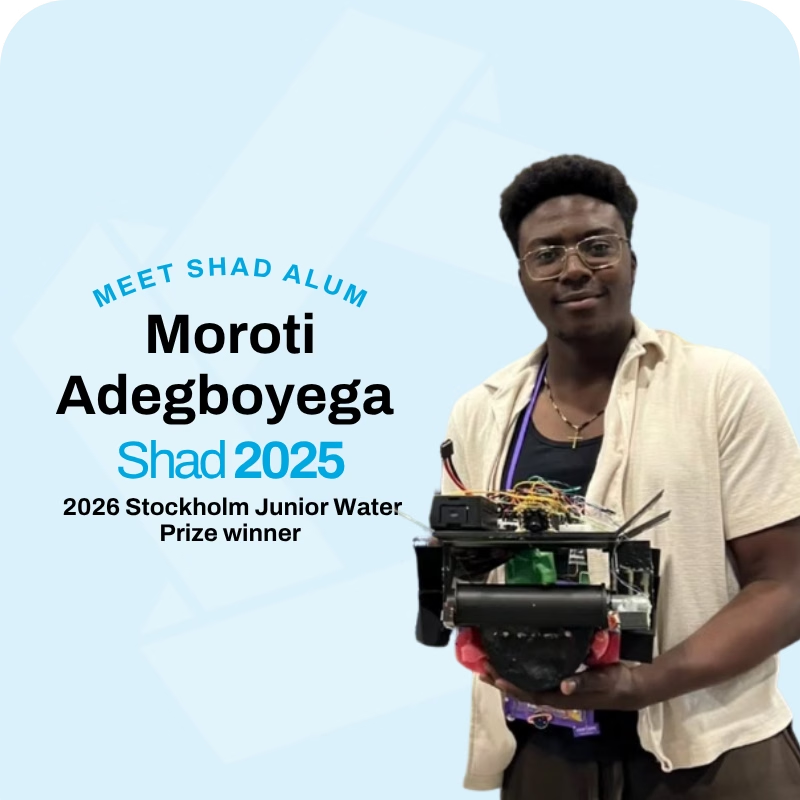
Moroti designed an autonomous robot that skims the surface of water and detects plastic debris. The system is guided by artificial intelligence and equipped with ferrofluid and a magnetic drum that removes debris upon detection. His current prototype collects 1.73 pieces of plastic per minute, proving to be more efficient, durable and less invasive to marine life than nets and filters.
The idea for Ecoferroquatics came to Moroti while scrolling on his phone and reading a story about a student project that used ferrofluid to take plastics out of water. He wanted to build a solution that used the same fluid, but operated as an autonomous robot instead.
“I was driven to build something better than the current model and I didn’t realize what that would look like,” says Moroti. “But I committed to it, even when it got really challenging.”
Moroti’s robot picking up plastics.
Moroti was confident in his programming ability but had to push through a steep learning curve for the technical engineering, water science and chemistry components of the project.
“Not every design worked out. It really showed how much you can learn when you build.”
Moroti’s interest in science really flourished in Grade 8, when he entered his first regional science fair.
“What got me into the science fair was a very simple project. I tested a potato at different temperatures to see how much electricity came out.”
Year after year, his projects grew in complexity and he became increasingly confident in presenting his ideas. One year he created an AI system that recognized breast cancer cells. Another, he built a drone that used AI and climate sensors to analyze environmental conditions to predict areas at-risk of a pandemic outbreak.
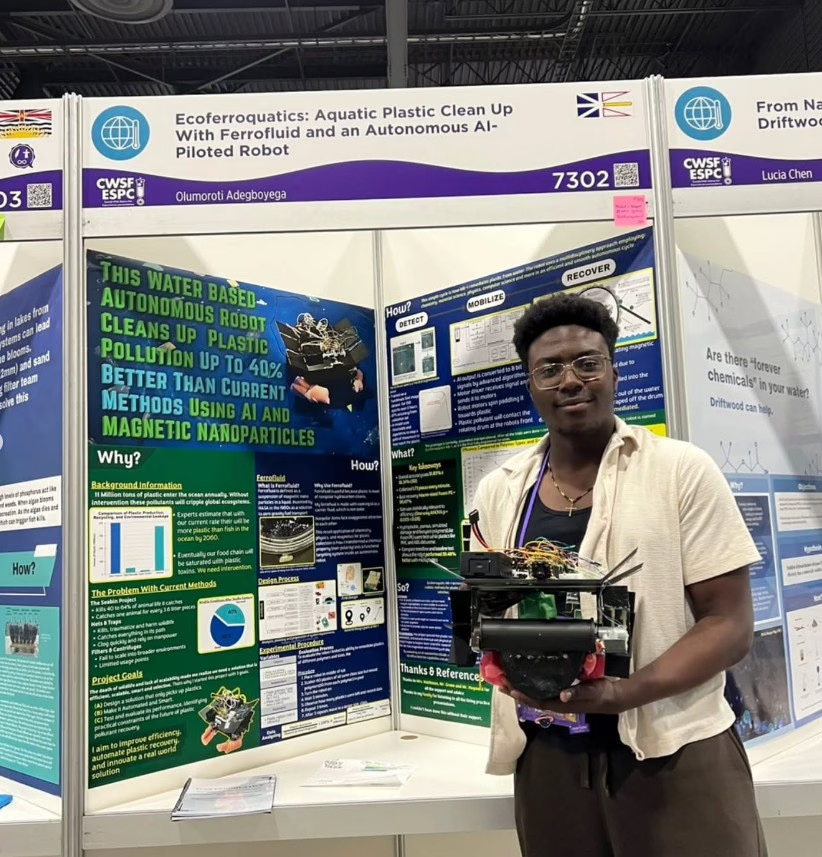
Moroti presenting Ecoferroquatics at the 2026 Canada Wide Science Fair in Edmonton.
His latest project, Ecoferroquatics, won Best in Fair at the Cenovus Energy Eastern Newfoundland Science and Technology Fair and earned him a spot at the Canada-Wide Science Fair. Not only did he earn a bronze medal, but he was also named one of the top three water projects, which was the start of his journey to meeting youth from all over the world for the Stockholm Junior Water Prize.
“I wish all of us could win because all of our projects have such hope and a chance to change how humanity moves forward.”
Moroti received his trophy from the Crown Princess Victoria of Sweden and got the chance to speak with her as part of his award.
“She asked me if there was one thing that I wanted to bring up that deserved to get international and top attention.”
He shared that youth need more access to opportunities and resources so they can drive meaningful innovation. Even within his own project, Moroti couldn’t find the right datasets to train his AI model, and had to eventually create his own because the information was not publicly available for students.
“We need young people to come up with amazing ideas because they are the ones that make revolutionary ideas that can truly change the world.”
It was attending Shad one year prior, Moroti says, that sparked this passion for youth innovation in the first place.
“Being in the Stockholm Junior Water Prize really reminded me of what Shad was like.”
Shad offered a unique glimpse into university life, as well as opportunities to connect with faculty, explore potential careers in STEM, and collaborate with like-minded youth.
“Being from Newfoundland, I don’t get to talk to youth who share that passion and share that drive as often. I finally got the chance to talk to them and I realized just how much I was missing out.”
Moroti and peers during the Shad 2025 program at Wilfrid Laurier University.
During the Shad Design Challenge, Moroti learned how to foster healthy group dynamics and embrace uncertainty with curiosity and confidence.
“Before, I was a lot more focused on making sure every idea was perfect before I even moved forward with it,” says Moroti. “But after Shad, I was a lot more execution-driven. All the things I did, I became more actionable.”
Less than a month after Shad, he launched TecNurtur, a non-profit that hosts free tech education workshops for seniors and kids where food donations are the only cost of entry.
“I realized I could use my passion for teaching and programming to combat food insecurity and help people in my community.”
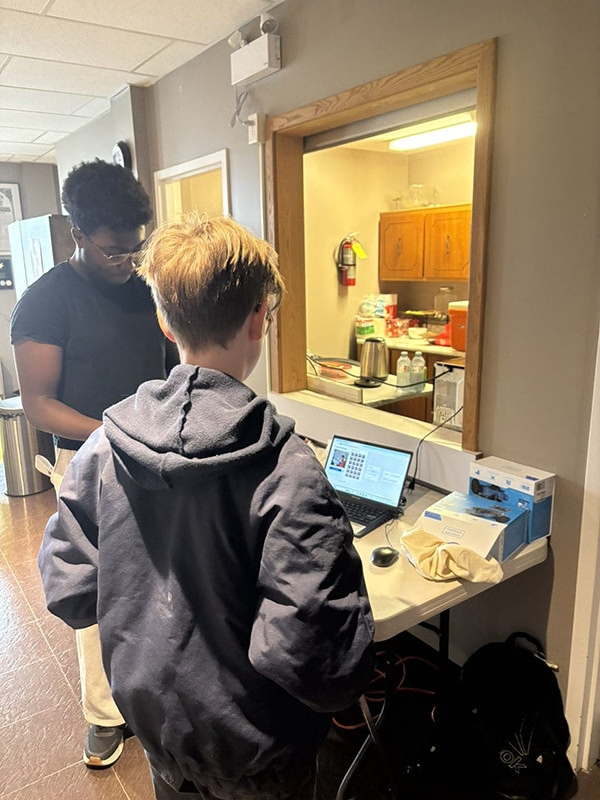
Moroti teaches youth about AI image detection and machine learning for a community fundraiser. Photo Credit: TecNurtur.org
Moroti was equally inspired to give back to a community that helped his family find their footing when they emigrated from Nigeria.
“When we first moved to Canada, it was very rough for us. My mom wasn’t having an easy time. But what was instrumental and helped change our lives was the senior citizens around us,” says Moroti. “They let us stay in their house sometimes and they babysat us. It was wonderful. I’ve never met such nice or kind people in my life.”
In one year, TecNurtur has hosted workshops for over 200 people and donated over 100 lbs of food to local food banks.
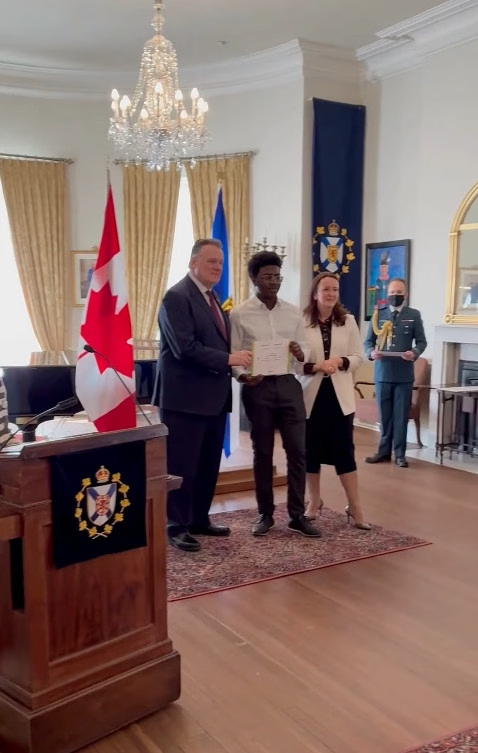
TecNurtur receiving an Ingenious+ Regional Award by the Lieutenant Governor of Nova Scotia.
TecNurtur is always looking for more youth to get involved in their work, especially as they expand outside of Newfoundland, with a chapter in Turkey and others in Ontario and Alberta. The group also hopes to expand their mission to support more youth innovation.
Right now, youth can visit their website and support micro-projects on technology, education, research, and food security, in exchange for volunteer hours.
“We want to move towards supporting youth and their projects specifically all over Canada.”
As for the future of Ecoferroquatics, Moroti says he is working to secure a patent and wants to dedicate more time on the project during university. He doesn’t have his sights set on a specific university just yet, but he is trusting the process.
That’s because he couldn’t have imagined all the wonderful opportunities and experiences that came with Ecoferroquatics when he first embarked on the project.
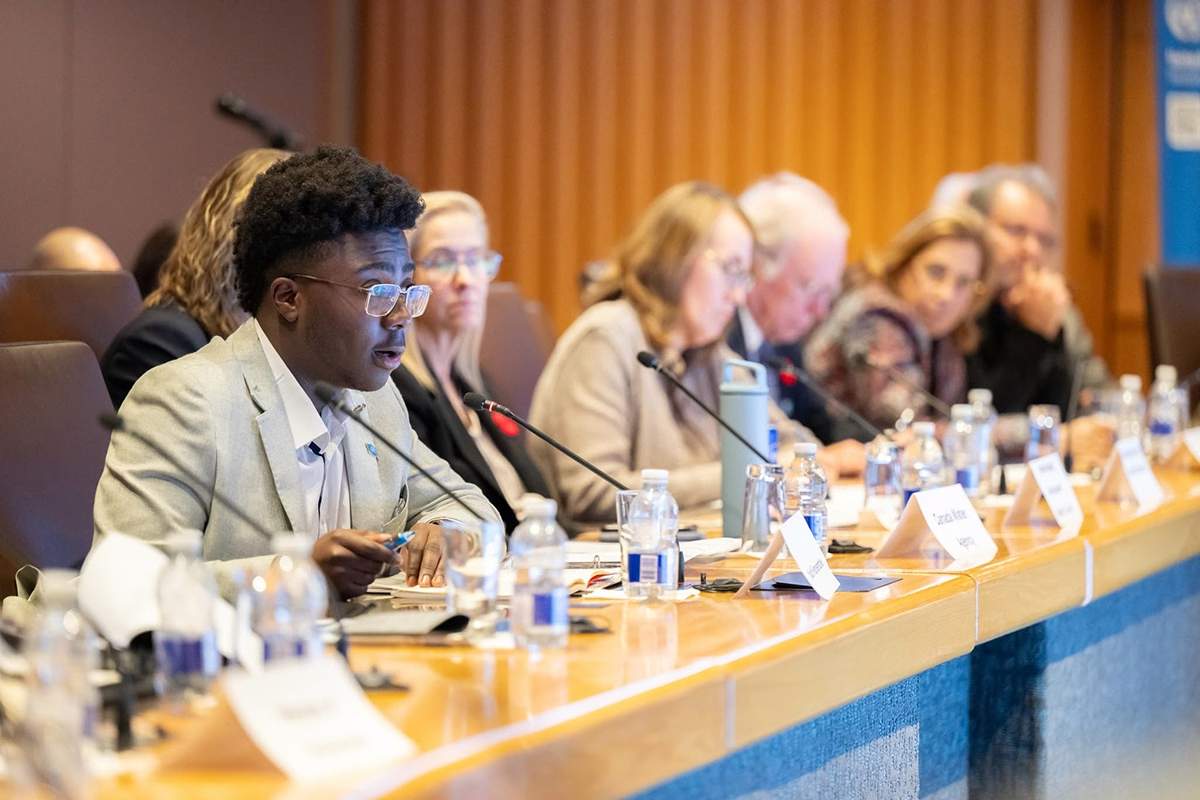
Most recently, he was invited to the United Nations University Institute for Water, Environment and Health’s 30th anniversary celebrations, where he delivered remarks on the role of young people in addressing global water challenges.
Moroti delivering a speech about involving youth in the global water discussion at the High-Level Policy Roundtable: Water in a Changing World: Peace, Cooperation, Diplomacy and Canada’s Role in the Global Agenda, hosted by Global Affairs Canada on November 2, 2026. Credit: UNU-INWEH.
While meeting with Members of Parliament, the UN Under-Secretary General and other international leaders, Moroti championed environmental research and youth innovation.
“The greatest thing you may not see coming… If you have an idea you really want to start, start it. Something great may come to you.”