


Jordan Savage always wanted to be an inventor. As a kid, he would dream-up ideas and scribble down his musings in a notebook, hoping that one day he’d be equipped with the right tools, knowledge and connections to turn to any page and make it a reality.
He is now living out that inventor dream.
He followed his passion for science and obtained a Bachelor and Master of Applied Science at the University of Waterloo. He built a network of connections through his university research and involvement in the Velocity Incubator. And he brought something new into the world – Python Pants – an innovative muscle recovery garment being tested by 16 different major league teams across the NBA, NFL, NHL, MLB and MLS.
It’s a compression device with a coiled air system that contracts around muscles for active sports recovery. What makes the product different from other compression garments is its technology and wearability. Python Pants are motion-friendly, meaning you can walk around and stay mobile during massage recovery. With traditional compression boots, athletes must remain in a fixed, lying down position during treatments.
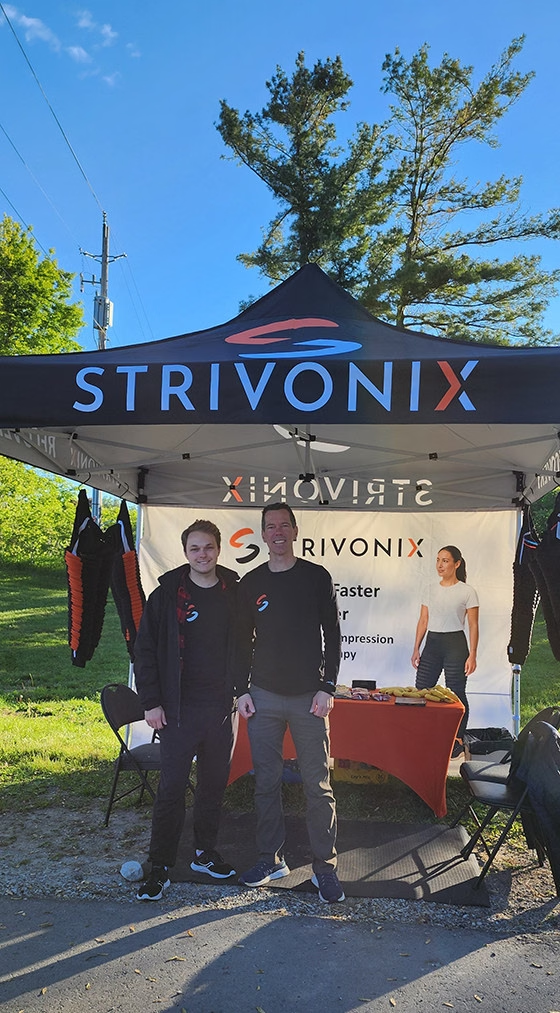
Jordan is the Chief Technology Officer at Strivonix, the venture behind Python Pants. He co-founded the company in 2025 alongside Chief Executive Officer Caleb Horst, an entrepreneur with almost two decades of experience commercializing technology.
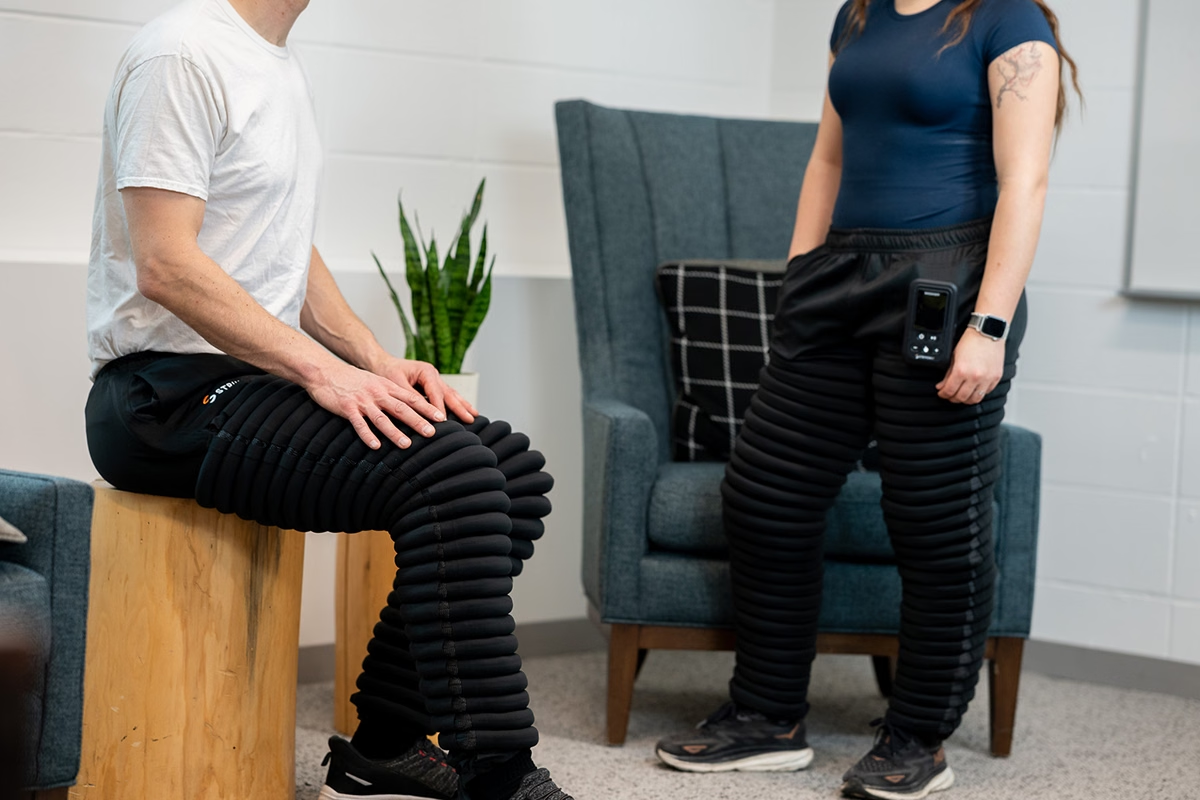
In addition to its athletic applications, there are potential future medical uses that Strivonix may explore, one of which Jordan worked on during his graduate program with Dr. Carolyn Ren at the University of Waterloo.
“There’s deep vein thrombosis prevention and there’s lymphedema treatment,” says Jordan. “Our lab had actually made a lymphedema treatment arm sleeve, [which] also factored a little bit into my knowledge of how to build arm sleeves.”
But what came before the testing and prototyping phase, that ultimately led to the creation of Python Pants, was Jordan’s decision to pursue a graduate degree in the first place. That idea crossed his mind at Shad.
Jordan heard about the Shad program from his mom, a high school biology teacher and marine biologist by education.
“She always fostered a love of science for me,” says Jordan, who attended the program at the University of New Brunswick (UNB) in 2016.

During the program, Jordan took part in a workshop that explored prosthetics and motion capture technology.
“I had absolutely no idea how motion capture worked up until that point so it was an interesting insight into prosthetics design and engineering. I got the opportunity to speak to some graduate students about prosthetic engineering and what their stance and take on it was…,” says Jordan. “It looked like they were having a lot of fun. So, when I was thinking about doing my master’s, I did think about them.”
Jordan’s own graduate research focused on soft robotics and pneumatic artificial muscle technology.
“I wanted to make a tool that would make it easier for engineers to predict how artificial muscles will behave so it would be easier for them to incorporate them into whatever they were designing.”
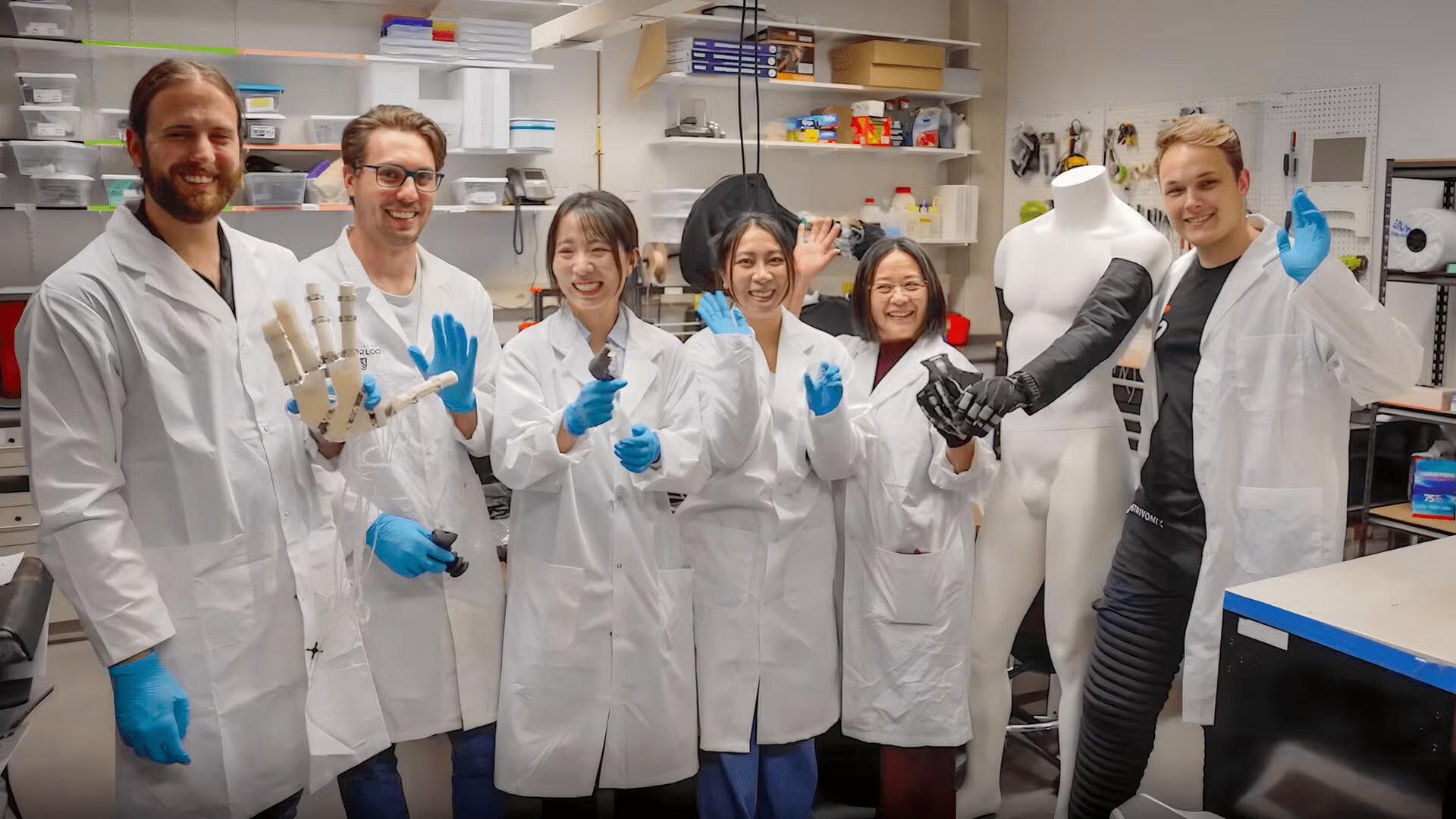
Jordan built a large array of artificial muscles for the project in the university’s microfluidics laboratory. One day in January 2024, he found himself idly wrapping one of these muscles around his pinky finger. After finding the inflated muscle created a soothing compression effect, he embarked on a side quest to learn more.
“I built a bigger version of it to wrap around my forearm, which coincidentally led to me making one of the world’s largest ever artificial muscles in length because no one has ever needed to make something so long,” says Jordan.
He asked several other graduate students for their feedback and also tested it on a pitcher from the varsity baseball team, who said it reminded him of recovery compression boots.
“He said he really liked it because my version seemed to feel very similar to him, but it was much sleeker looking, much lower profile,” says Jordan. “When I ended up building the full arm sleeve for him, from shoulder down to wrist, he was able to bend his elbow in it.”
After conducting more tests with college athletes, he applied to the Velocity Up Start Program, a robust business initiative that helps University of Waterloo students turn ideas into ventures with access to funding and business expertise.
But this wasn’t Jordan’s first time taking an idea and turning it into a business. He did that at Shad too.
“I remember making a business plan in one of the rooms at UNB. It was one of my first times ever having to make a business plan.”
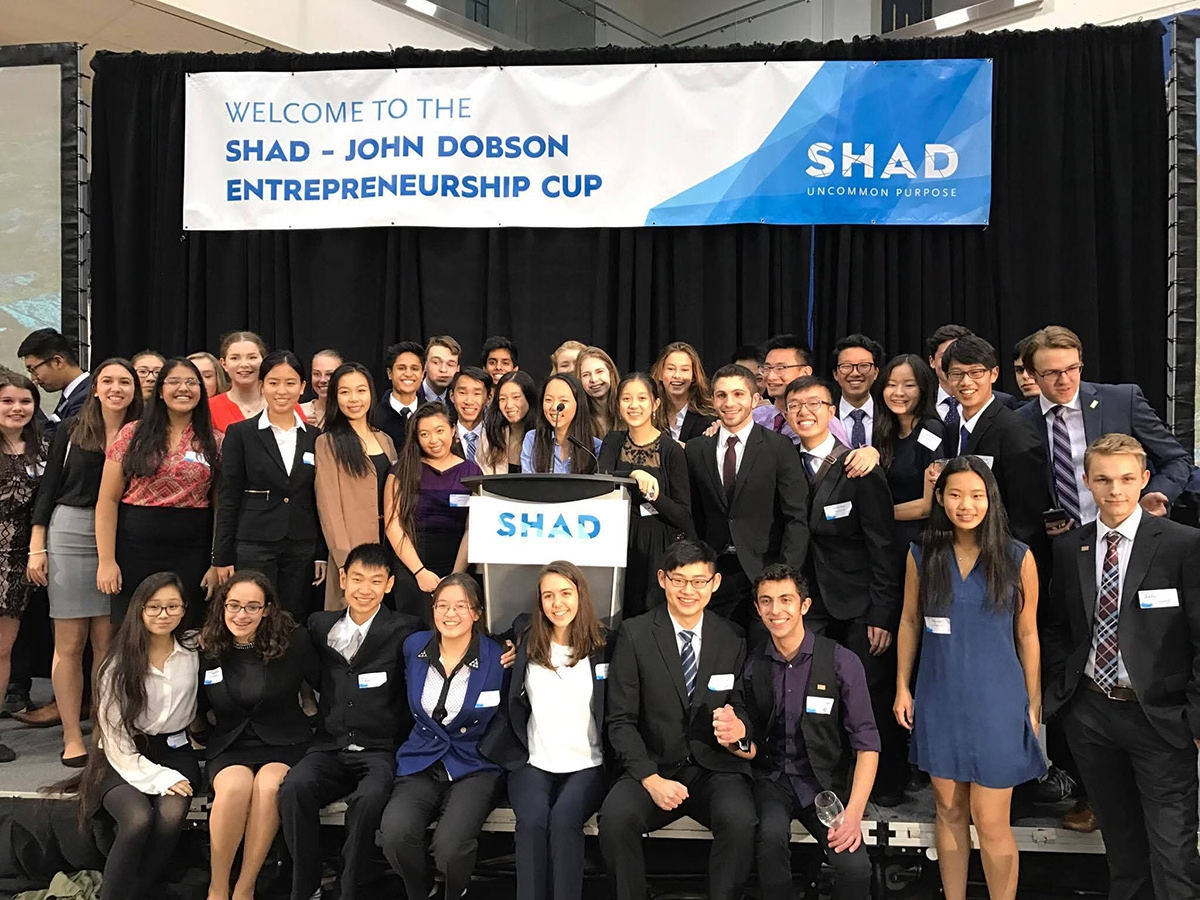
The Shad Design Project challenges high school students to develop entrepreneurial solutions for real-world problems, and in 2016, the theme was all about reducing food waste.
“We designed a company called ORA Organics,” says Jordan. “The idea was that we wanted to make a preservative out of fully naturally occurring compounds to spray on to organic produce so that it would stay an organic produce, but would also have a larger shelf life.”

Jordan and his peers tested their product by mixing natural chemicals, like vitamin C and citric acid, until they found the perfect combination.
“We sprayed some strawberries and they lasted an extra week and a half in the sun before degrading, compared to not having sprayed them. Technically they were still organic because nothing was produced in a lab. It was all things that come from fruits and vegetables already.”
After developing their product, it was time for Jordan’s team to pitch their business to a panel of volunteer investors.
“One of the investors called me Vanna White because I stood on the side holding the bottle and smiling, and said very little to their various questions…,” says Jordan. “I think about him every time I go to a pitch.”
And many years later, with a compelling pitch and an exciting idea in tow, Jordan was awarded $15,000 in Velocity Up Start funding.
“I used that money to build the first real prototype. I also purchased one of the competitor products to do that side-by-side comparison.”
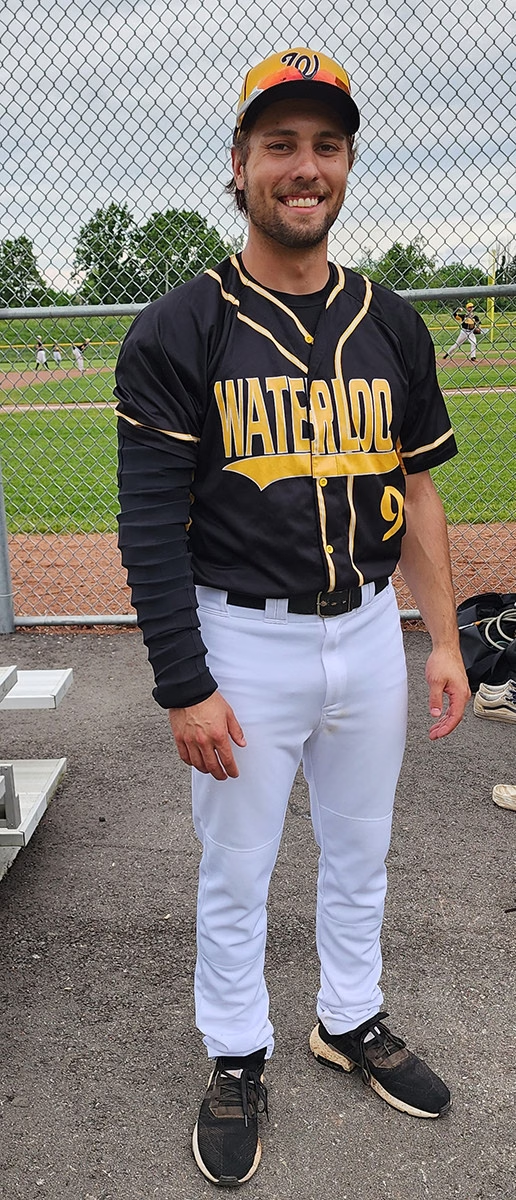
Customer validation, especially with athletes, remained a priority when testing this first prototype. Jordan spent countless afternoons and weekends testing the device at several baseball diamonds across Waterloo.
“After the game I would be in the dugout and I would put the sleeve on somebody and ask, ‘What do you like? What do you not like? What are you doing with it? Would you use this?’”
This testing philosophy continued when Jordan met Caleb Horst and co-founded Strivonix. Observing a better opportunity in the market for leg recovery, they decided to pivot from arm sleeves to pants. After rigorously designing, testing, and manufacturing the new garment, they got it in the hands of professional athletic organizations.
“They want the best product for the best people so they are completely ruthless with whatever criticisms they have and that’s exactly what you want from someone who’s giving you feedback validation.”
One of the largest challenges they faced along the way was figuring out how to design and create Python Pants at scale. They had to acquire a lot of knowledge from a variety of sectors since there wasn’t a manufacturing precedent to rely on. Working full time at the Velocity Incubator in Kitchener provided them with the tools and guidance required to bridge this gap.
“Velocity having experts in various different ‘sub-things’ was very helpful at a moment’s notice…,” says Jordan. “You can’t be an expert at everything but you can draw on the expertise of everyone else. People are generally much more willing to help you out than you think they would be.”
Strivonix is approaching its first seed funding round following a successful Kickstarter campaign earlier this year. Jordan hopes investors will accelerate growth and fuel research and development to explore products like arm sleeves and medical devices further. Python Pants will also be available for the public to purchase in November 2026 — an exciting milestone for any entrepreneur, especially one who’s fulfilling a childhood dream.
“I’ve always wanted to bring a new thing into the world. My main driving factor has always been calling me back to I want to be an inventor, and this is what you do.”