

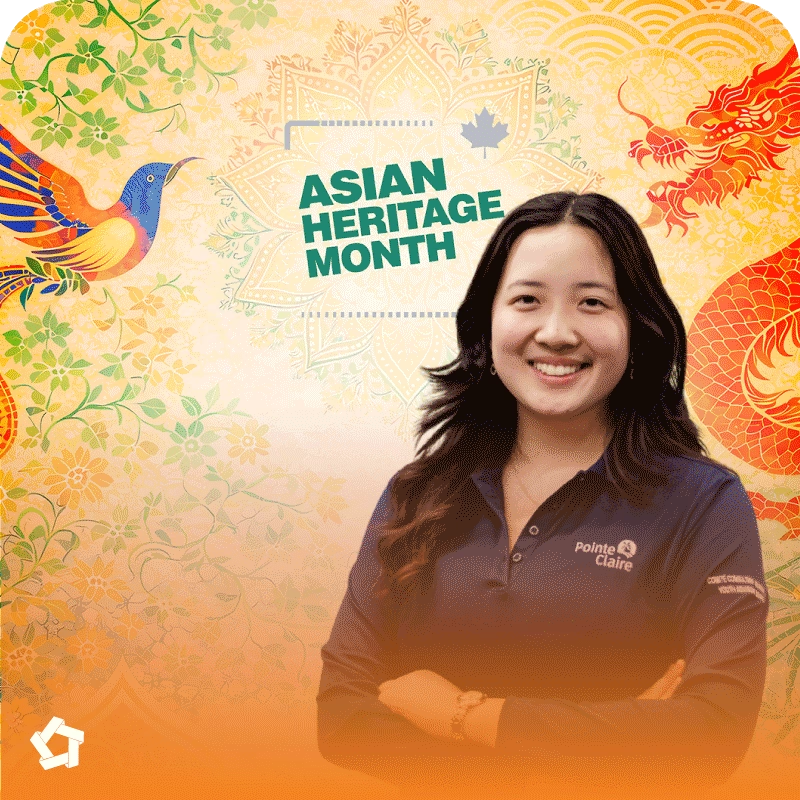
In the winter of 2015, a government document arrived at Chloe Guan’s family apartment in Montréal. The letter was in French. Her parents spoke only Mandarin at home, and English when needed, and Chloe, who had been in Quebéc schools for no more than two years and was still finding her footing, was the only human translator they had. So, at the age of 7, she translated it as best as she could. She has been trying to bridge worlds ever since.
Born in Dalian, China, Chloe moved to Montréal at five and a half, growing up trilingual in a city where French and English flow into each other and a household where Mandarin was the preferred language. Her mother, who had been an English literature teacher, filled the apartment with books. Her father encouraged her to try anything she was curious about. She swam competitively for nearly a decade, read about shipwrecks and World War history, drew when she felt like it, and slowly began to suspect that the disciplines and identities other people seemed to keep separate were, for her, never really separate at all.
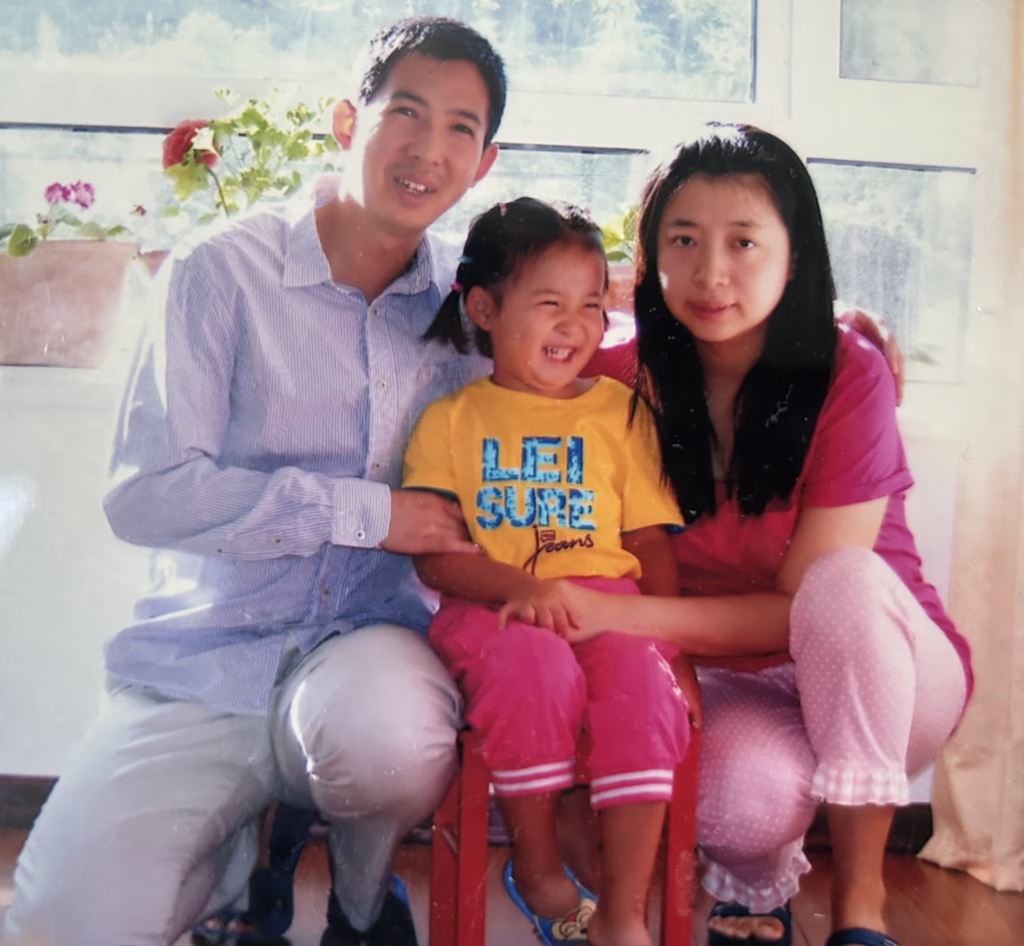
“Both of my parents always encouraged me to learn for the sake of learning…And they showed me — you can be athletic, but you can also love reading, writing, music. Those things actually help each other.”
For Chloe, that kind of mixing always felt natural. Montréal, with its layered languages and overlapping cultures, has made it ordinary for someone to carry more than one identity, one language, or one interest. But schools, she would later notice, were less comfortable with that.
By the time she finished high school, she had felt the quiet pressure to pick a lane: arts or sciences, one path or another, a version of herself that would fit a single construct. She had never managed it and was starting to wonder whether the inability to comfortably choose one was actually a flaw.
“Most people are here to get specialized in one. You don’t want to be that person who’s like, I don’t really know which one to choose — because then everyone else is moving forward with some level of “clarity” in their professional lives. I definitely felt that pressure.”
Then, in the fall of her high school graduating year, something shifted.
She had been planning to apply to Shad for some time, the classic live-in program that brings together sharp young minds for a month of “STEAM challenges”. But when she came across the description for the new A-Plus option, where arts, sciences, and the humanities were woven into a single month at St. Thomas University, she impulsively, yet intuitively, changed her first choice. For the first time, a program seemed to be asking the same question she had been carrying all along: why choose?
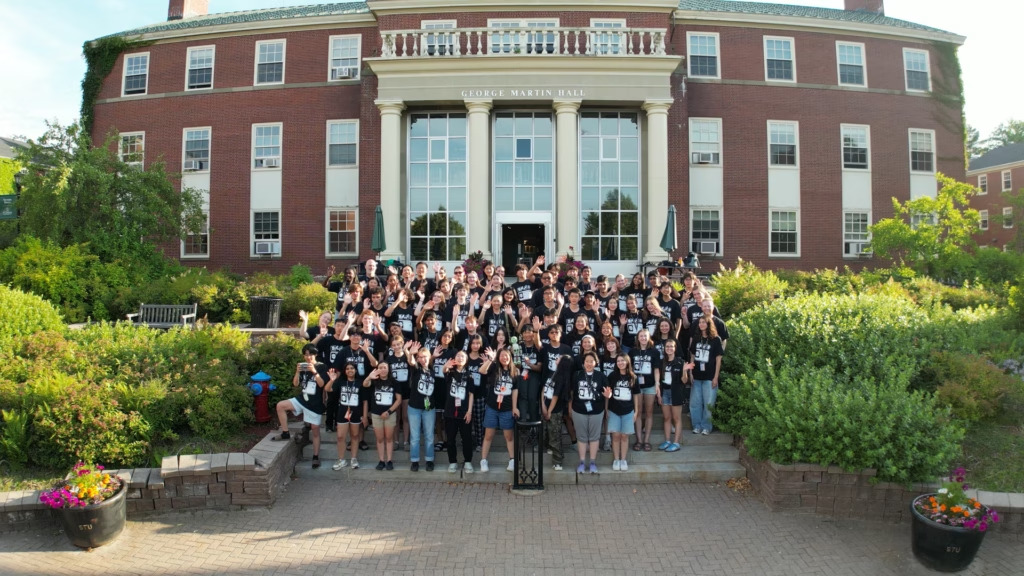
A few months later, in the summer of 2025, at sixteen, she landed in Fredericton as part of the very first Shad A-Plus cohort. Within days, something magical began to shift.
“Honestly, we were the first cohort of Shad A-Plus, so nobody really knew what to expect. But what surprised me most was just how judgment-free it was. Everyone was so open-minded that it was just okay to try, and okay to fail.”
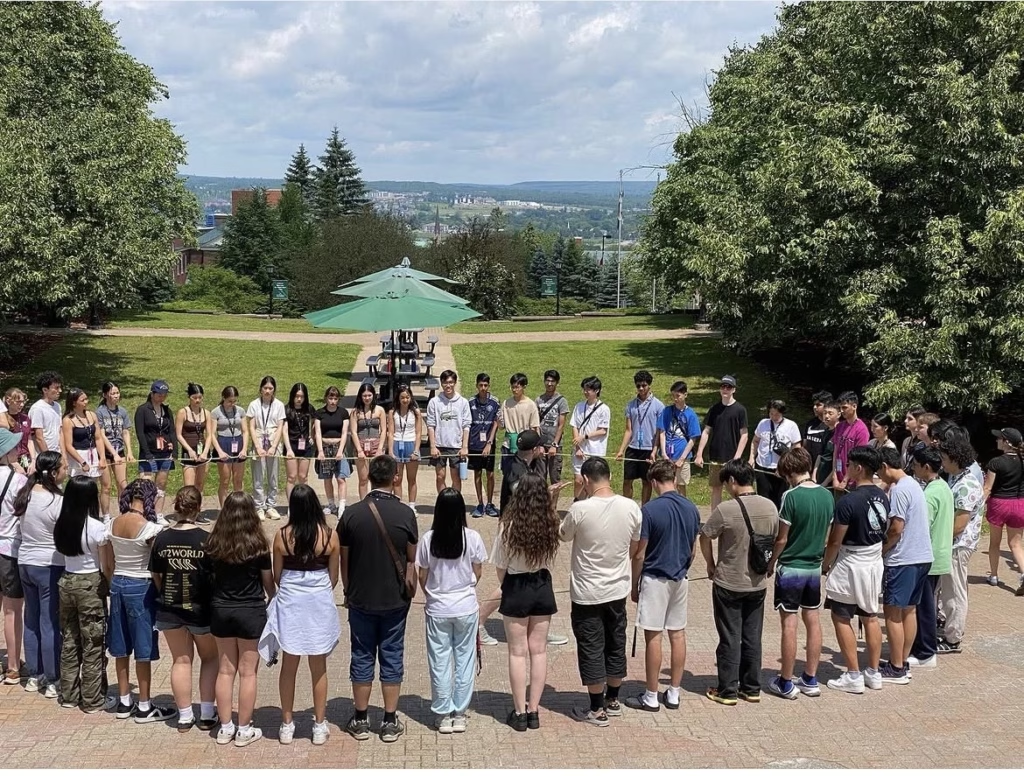
On the first day, Program Director Ian Fogarty gathered all forty students into a circle and passed a carabiner along a rope. They timed themselves, found faster methods, competed quietly. Then Ian explained what the shape meant. In a circle, no one stands in front of anyone else. No one is behind. Everyone sees everyone.
The circle held through the whole month. Students read Descartes in small seminars with St. Thomas’s Great Books professors, ran a moot court, conducted experiments, and worked through the Design and Entrepreneurship Challenge in mixed teams. Chloe, who has always found numbers harder than words, was put in charge of finance for her team. She figured it out.
The faculty made a particular point of drawing unexpected lines between fields. One Shad PA explained she had become a criminologist because she loved Criminal Minds. Another PA was a mathematician who juggled. Each story sounded like a small permission slip.
Somewhere in those weeks, an idea Chloe had carried half-consciously her whole life came into focus. She had grown up understanding that languages did not compete with each other inside her head. They added up. The same, she realized, was true of disciplines.
“I had a Science and Society class last semester, and every class I’d leave feeling like I just learned so much. I never really got that feeling from solving integrals. Those things adding up together made me realize: I love science, but I love the arts as well. Let me do something with both of them.”
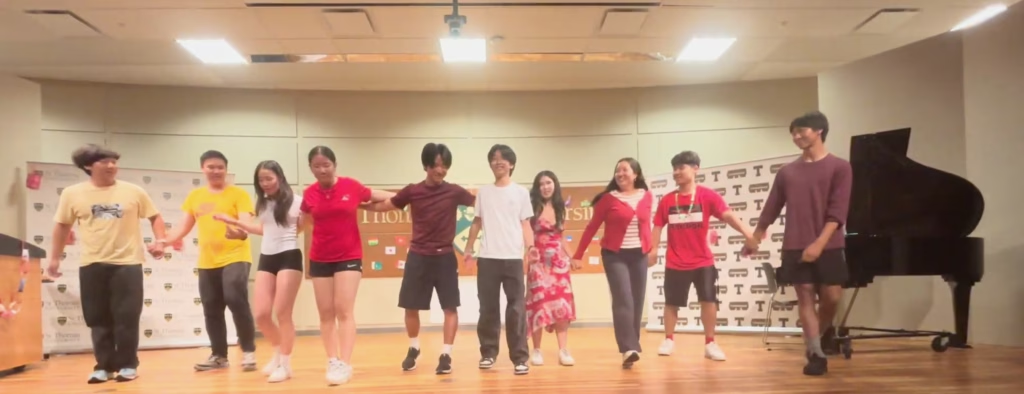
Multicultural Night arrived partway through the month at Shad and for Chloe it turned into a small homecoming. With friends she had met two weeks earlier, she learned a Chinese fan dance reaching back to dance lessons she had taken as a small child in Dalian. Later that same night, as the only student from Quebéc in the A-Plus cohort, Chloe sang a French song with two friends, Yifan and Edith, who also spoke French. In a single evening, in front of forty people, she had moved between Dalian and Montréal and made both feel like home.
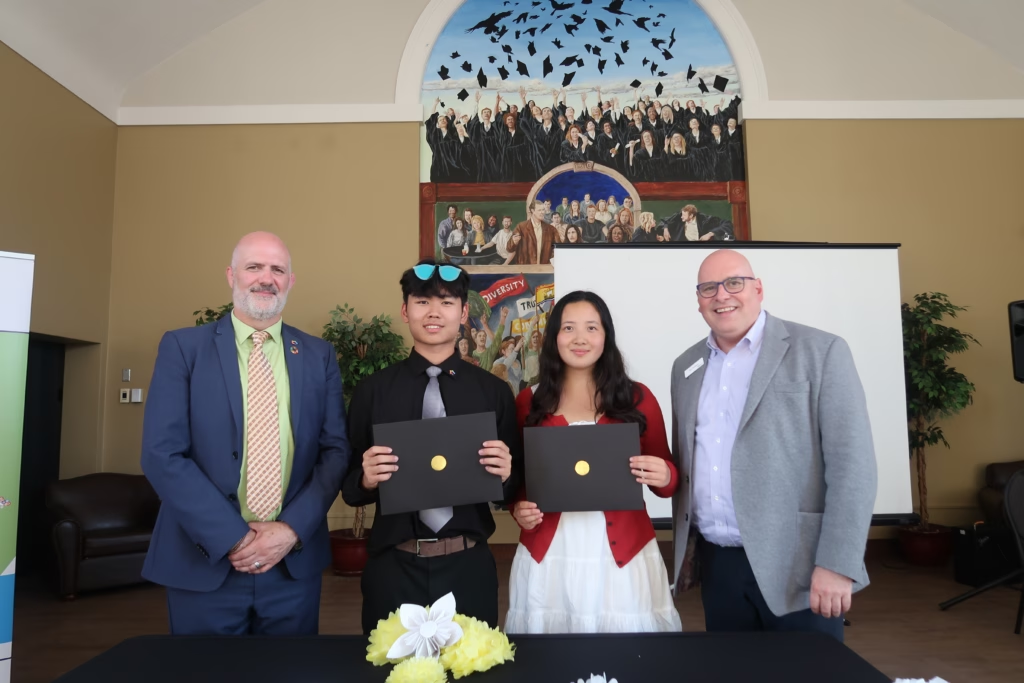
All of it kept pointing to the same thing–the circle. The disciplines that refused to stay separate. The languages flowing into each other. The forty different stories, none of which cancelled the others out. In her valedictorian speech at the end of the month, she would put it this way:
“Piece by piece, something started to come together. Not just in our bags, but in ourselves… It wasn’t always easy. Some days were overwhelming. Some moments tested our confidence. But just like a puzzle, we kept going— rotating the pieces, trying again, helping each other see things from new angles. And now, looking back, we realize: that random puzzle piece? It fits perfectly.”
When asked what culture she most represented, Chloe had her answer ready, though she had not known she was preparing it.
“Honestly, it’s really hard for me to fit myself into a box. So I just go with the human culture. And I think more people should try that one.”
It was not a retreat from her Chinese identity, or her Quebécois one, or her Canadian one. It was the fullest expression of all three at once. The point of her childhood, of the trilingual apartment, of the French letter she translated at seven, of the vague dance moves she learned in Dalian and performed in Fredericton, had never been to choose. It had been to keep adding.
When she was asked what she would tell the next cohort of eager students headed to Shad this summer, she said:
“Go in with an open mind, just really enjoy each day. Instead of thinking what if, focus on what you do know. When someone smiles at you, or invites you to sit and eat a meal with them — that’s something actually happening to you. You can enjoy the moment.”
Today, Chloe is finishing her first year of Arts and Sciences at CEGEP in Montréal and plans to apply to university. She is moving toward health policy, drawn by the conviction that the distance between a good system and a broken one is often not a technical problem but a human one— a place where science needs storytelling, where data needs empathy, where the disciplines have to be braided together to do any real good. The future, she knows, will keep moving—and with her circle now wider than forty, she has the confidence and clarity to move with it.