A healing journey: Shad alum and medical student driven to support Indigenous health
Stories
When a sports injury landed Victoria McMahon an extended hospital stay with two broken ankles, it set her on a journey of healing that extended beyond just her own.
At the time, Victoria’s passions were soccer and volleyball. In Grade 9 at the time of her injury, she dreamed of a career in sports. But the compassionate care she received from Dr. Lucas Murnaghan, her orthopedic surgeon at the Hospital for Sick Children, inspired her to strive for a career in medicine.
“I knew I was going to have to study a lot more to get good grades if I wanted to become a doctor one day,” Victoria said. “I became more oriented towards academics in Grade 9 and 10. That’s how I found Shad.”
During the more than a year of recovery after her surgeries, Victoria learned of the systemic racism that other Indigenous patients have experienced while seeking medical care and that is reflected in the Truth and Reconciliation Commission Calls to Action. It sharpened her focus.
“I thought being a doctor would be a cool career, and then since I had a lot of time on my hands with the injury and surgeries, that’s when I was on my laptop doing all of this research,” she said. “I got the idea that maybe I could work with Indigenous people to support them and be a safe space for them in healthcare.”
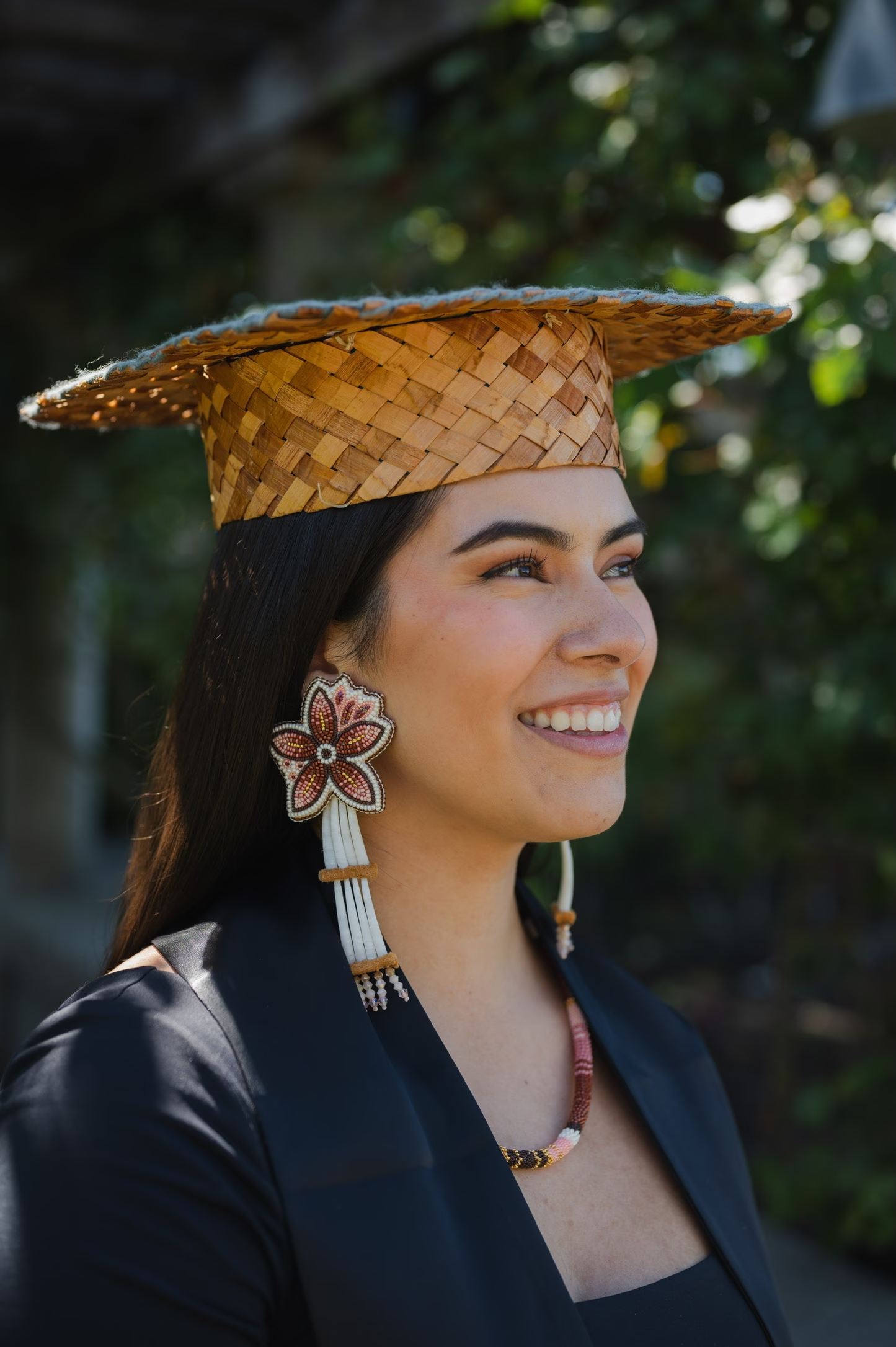
Bachelor of Kinesiology at 2024 UBC Indigenous Graduation ceremony. Photo taken by Tamara Chang
Victoria is a member of Deninu Kųę́ First Nation in the Northwest Territories through her mother. She does not recall any other First Nations students in school growing up in Barrie, Ontario. And the first time she was introduced to other Indigenous youth in education or academics was through a program offered by the Verna J. Kirkness Education Foundation, a Shad partner, which works to increase the representation of Indigenous young people in higher education. Two months later, Victoria attended Shad 2018 at McGill University in Montreal.
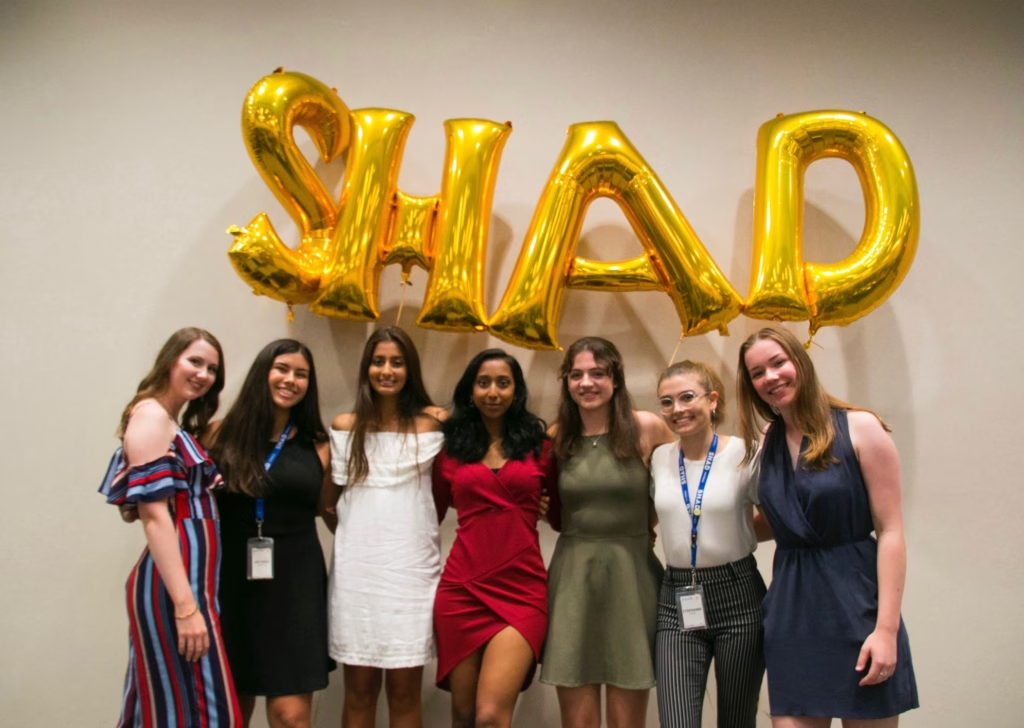
Shad McGill 2018 graduation. Left to Right - Emily Gagné-Hedderson, Victoria McMahon, Kaya Bratch, Kayva Kadi, Heather Chisholm, Stephanie Cristea, Maeve Campbell
“I was sporty and I was nervous at first about being surrounded by a lot of intelligent youth who all have really interesting backgrounds and who were doing really cool things for people our age,” she said.
Though feeling challenged, Victoria soon found her footing. She said it was a great opportunity to live on a university campus, and she loved telling her friends at school that she lived in Montreal for a month.
“I think my social skills carried me at Shad because I was able to start up conversations, and I saw that it wasn’t a skill everyone had,” she said. “The confidence I gained after that month at Shad helped me be able to see myself going far away for university. I then knew that I could be surrounded by other smart youth and be successful.”
Victoria earned an undergraduate degree in kinesiology from the University of British Columbia. She then became the first Indigenous person in Canada to win a coveted Chevening Scholarship, the Government of the United Kingdom’s global scholarship program. It funded her master’s degree in creative health at University College London. Her dissertation, Indigenous Ways of Knowing: Integrating Approaches into Canadian Healthcare Systems, focused on combining traditional knowledge and Western medicine.
Now a medical student at NOSM University, formerly known as the Northern Ontario School of Medicine, Victoria recently had a work term at an urban Indigenous health centre. She saw first-hand the way doctors are blending different traditional and Western treatments in practice.
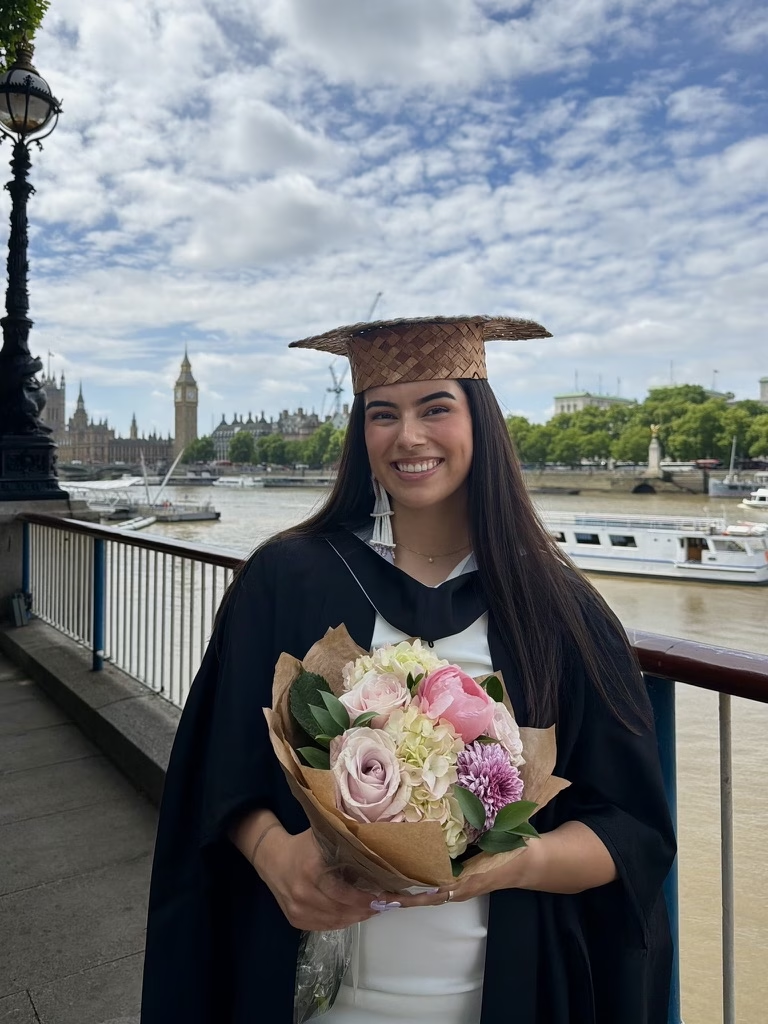
UCL Master’s graduation in London, England (May 2025). Victoria is wearing a cedar woven graduation cap made by Rhonda Carriere.
“Sometimes seeing myself in medicine has been difficult. But being able to shadow Indigenous physicians was really inspiring,” she said. “I can see myself doing family medicine and working in community.”
Victoria hopes to become a family physician at urban Indigenous health centres in British Columbia, where traditional ways of knowing and compassionate care will be integral to healing.